


Bugs not on the backlog after Update
If you Update yout TFS on premise from 2013 to 2015 or from 2015 to 2015 Update 1 you might experience that your bugs are no longer displayed in your backlog. This is can now be configured for individual teams. Open the settings for your project. Click on the team that you want to configure. Got to settings and configure how the bugs are handled in the backlog of the team. The bugs then appear again on your backlog. What you shouldn’t do is modify the workitem categories like some posts suggest. If you do this you will lose the capability … Continue reading Bugs not on the backlog after Update

Run Pester tests in PowerShell ISE with IsePester
Today I stumbled upon a package in chocolatey that I wasn’t aware of. It’s called IsePester from @dfinke. If you develop you PowerShell scripts with ISE and run Pester tests this is a really nice package. If you haven’t played around with chocolatey – do it. It’s a really need packaging manger that makes setting up your dev machines really easy. To install chocolatey just run the following command in PowerShell: To use Pester you have to install it. If it is already installed you can override it with -–force / -f Install IsePester the same way… If you now … Continue reading Run Pester tests in PowerShell ISE with IsePester

Run your Pester tests from GitHub in a VSTS/VSO build
End-To-End Scenario how to author PowerShell with Visual Studio, GitHub and Pester and test your script in Visual Studio Team Services VSTS / VSO. Continue reading Run your Pester tests from GitHub in a VSTS/VSO build

Use Pester to author your PowerShell scripts
Pester is a great module for testing your PowerShell scripts and modules. It has great mocking support, a test drive for setting up isolated files and supports a lot of assertions. Since the importance of PowerShell growths, testing your scripts is a must.
This is part 2 of the series “Develop next level PowerShell with Visual Studio and Pester”. It assumes that you have a Visual Studio solution with a basic Pester Test in GitHub.
| Post | Content |
| Part 1: Develop next level PowerShell with Visual Studio and Pester | In this post I focus on creating the project in Visual Studio and interacting with a source control system like git. |
| Part 2: Use Pester to author your PowerShell scripts using TDD/BDD | This post focuses on writing PowerShell scripts or modules using Pester as a TDD/BDD framework. |
| Part 3: Run your Pester tests in a VSTS build | In this post I show you how you can run you tests in a continuous integration build and display the build status with a badge in your repository. |
Pester basics
If you create a new test in Visual Studio, it looks like this:
Describe "PowerShellTest1" {
    Context "Exists" {
        It "Runs" {
        }
    }
}
As you can see you have three levels:
Describe: This is the name of the test displayed in test explorer. It is not ONE test in the test results. It’s more a container scope for many tests that executes as a unit.
Context: Like “Describe” the Context is a container for tests. You can mock functions or have test files in the scope of a context.
It: “It” is the actual test. You add an assertion here to test the state of your system. “It” is also a scope for mocking like context.
You can use these elements to structure your tests in a BDD style after the GivenWhenThen pattern.
$project = (Split-Path -Parent $MyInvocation.MyCommand.Path).Replace(".Tests", "")
$sut = (Split-Path -Leaf $MyInvocation.MyCommand.Path).Replace(".tests.", ".")
. "$project\$sut"

Describe "AnswerToUltimateQuestion" {
    Context "Given an enormous supercomputer named Deep Thought, when we ask the ultimate question about life, the universe, and everything" {
        It "should return 42" {
			       AnswerToUltimateQuestion | Should Be 42
		     }
    }
}
Continue reading “Use Pester to author your PowerShell scripts”

Develop next level PowerShell with Visual Studio and Pester
End-To-End Scenario how to author PowerShell with Visual Studio, GitHub and Pester and test your script in Visual Studio Team Services VSTS / VSO. Continue reading Develop next level PowerShell with Visual Studio and Pester

WLW Plugin for Open Live Writer #OLW available
I use Windows Live Writer for quite some time to write my post for my WordPress blog. The last version that was published by Microsoft was in the year 2012. So I was very happy when a few days ago the Open Live Writer (OLW) was announced. The OLW is an open source clone of the Windows Live Writer and is supported by a group of volunteers. Check out the post from Scott Hanselman for more details. What kept me from using it until now was the missing WLW Pluging (The Live Writer Source Code Plug-in For WordPress.com Blogs) from … Continue reading WLW Plugin for Open Live Writer #OLW available
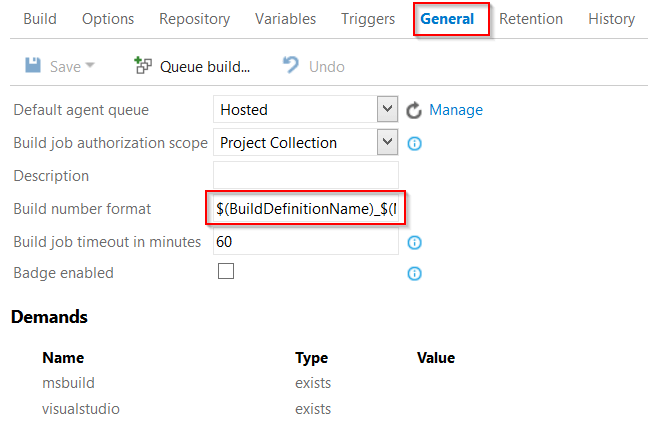
Set assembly and app version to a matching build name in TFS 2015 or VSO Build.VNext
One of the most common customizations in TFS XAML build templates was to automatically update the assembly version number. This can also be done in build vNext using a small power shell script. I also added the option to apply … Continue reading Set assembly and app version to a matching build name in TFS 2015 or VSO Build.VNext
Trigger a vNext Release from build in TFS 2013/2015 on premise
I always had a lot of problems triggering a release from a build (Vnext or Xaml) on premise if I work with agentless deployments. In the cloud this works like a charm – but on premise it never worked for me. I tried it with the blog post on msdn – but no success. Today I started to use Fiddler to monitor the api calls that the Release Management Client makes. (BTW: I know now, why the app is so slow if you have limited network bandwidth. The client is really chatty!). With Fiddler and the Invoke-RestMethod commandlet its quite … Continue reading Trigger a vNext Release from build in TFS 2013/2015 on premise
Visual Studio Release Management and PaaS
Can you deploy Platform as a Service (PaaS) components to Azure using Visual Studio Release Management? I get this question quite often lately. Short answer: yes you can. And how? Via a virtual machine. Yes – this is Infrastructure as a Service (IaaS) and not PaaS. Yes – this is not what you expected. Me neither. But it’s the only supported way right now. I hope this will change in future versions and that we get a “Azure PowerShell” like we have in Build.VNext. But right now this is the way to go. If you watch BREAKPOINT: Release Management and … Continue reading Visual Studio Release Management and PaaS
New Version of SPEmulators available on nuget
Today I released a new version of the SPEmulators – the package to emulate SharePoint Server API in Farm Solutions – on nuget. The current version is 2.0. The current version includes: Support for Visual Studio 2015 Enterprise Fixed errors for some editions of VS 2012 and 2013 Included Pull Request from Vladimir Almaev with support for SPViewFieldCollection Fixed some minor bugs For installing and using the package please refer to my original post. If you have any questions, issues or feature requests, please create an issue on the project page on GitHub. Continue reading New Version of SPEmulators available on nuget
 writeabout.net